don't read poetics in these lines review
don't read poetics in these lines
Basel Abbas and Ruanne Abou-Rahme
2018-2024
Saddle-stitch booklet
32 pages
5.25 x 8 in
Edition of 100
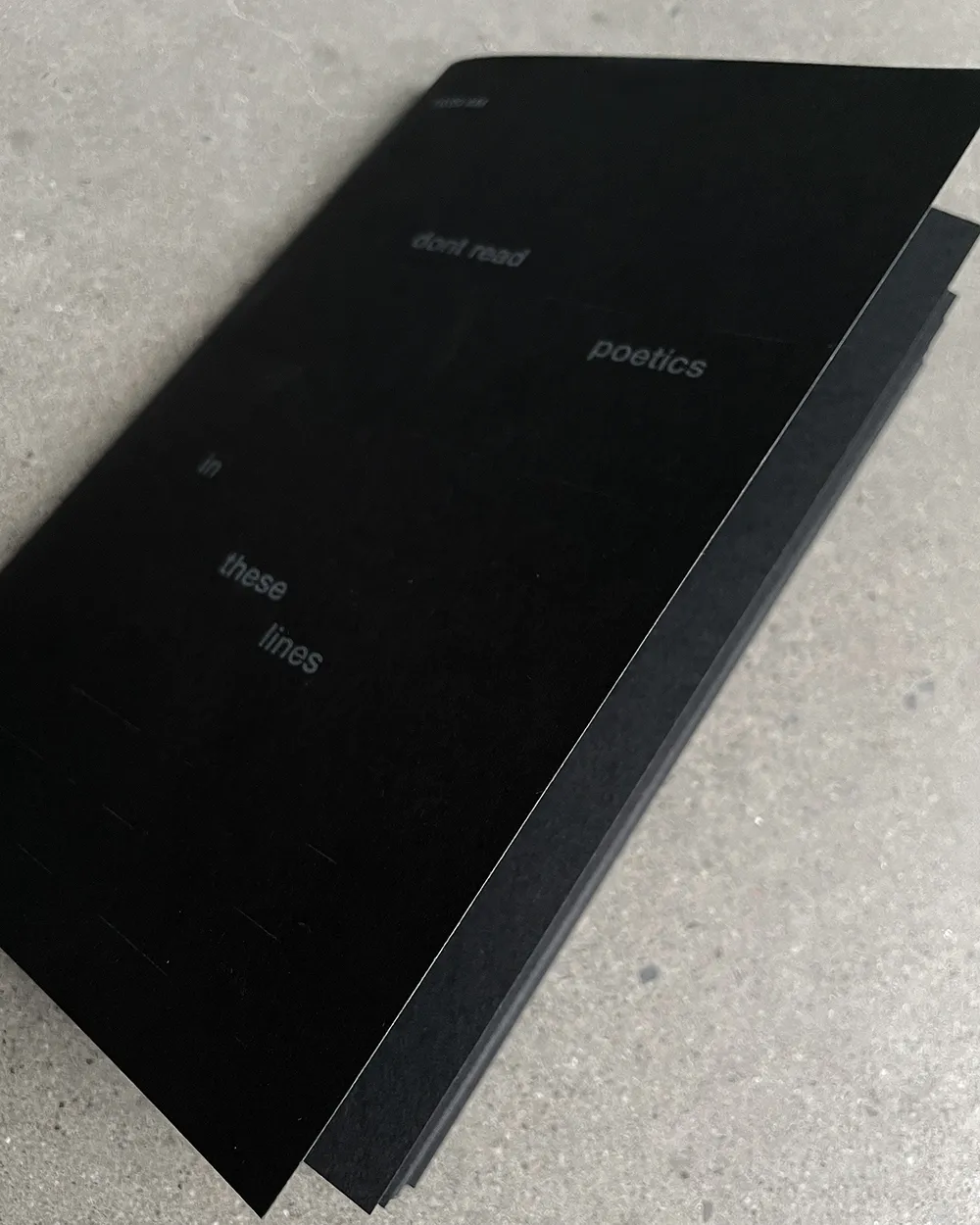
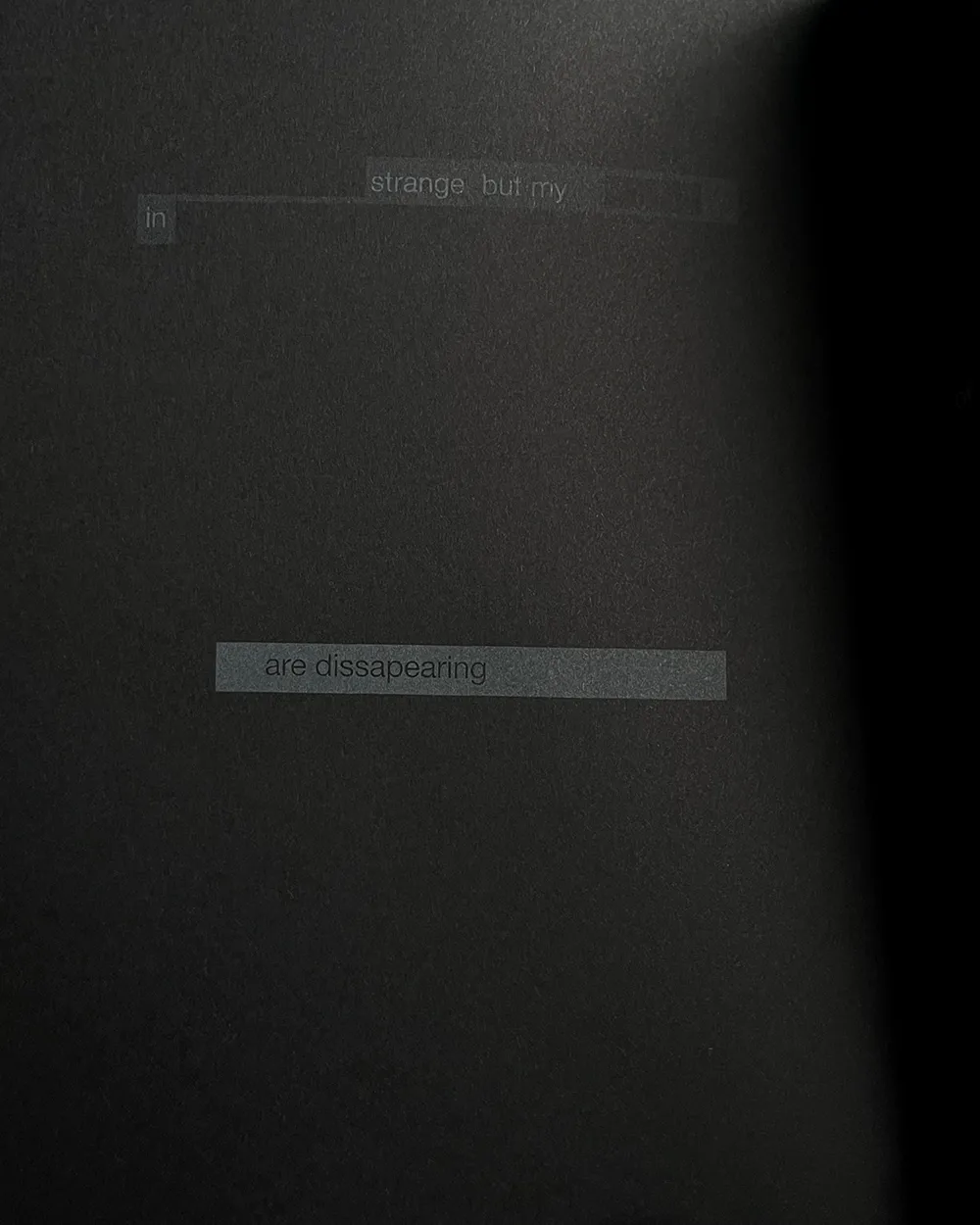
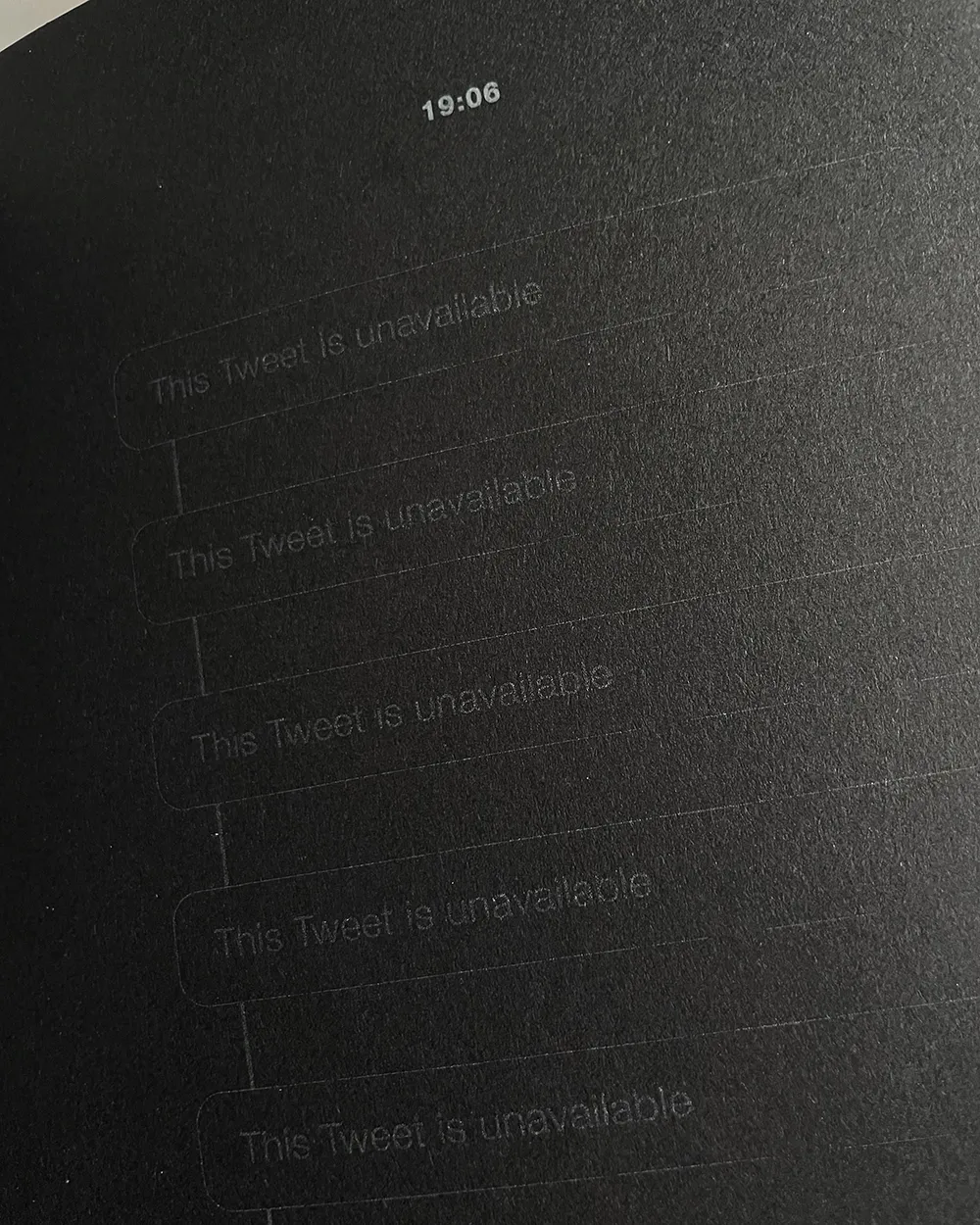
Fragments of sampled text, cellphone time stamps, ghostly icons, and digital detritus are printed in grey upon/within rich black pages. The words drift across spreads in loose constellations, at times barely readable, depending on the reflection of the light. Acts of redaction. An archive of erasure.
Palestine
is old news.
It was through this publication that I discovered the incredible work of artists Basel Abbas and Ruanne Abou-Rahme. Or, it was through meeting Basel and Ruanne that I discovered this publication. I didn’t know who they were, but at the 2024 New York Art Book Fair*, our Justseeds poster display drew Ruanne into a lively, comradely, conversation. To meet them there was a real blessing, and I was so happy to exchange some Justseeds prints with them and pick up their books and swag.
It was also this publication that really pushed me into figuring out what I wanted to do with Matter vs. Spirit. As soon as I picked it up I was drawn in and knew I had to think through it, write about it, though it's taken me this long to get something down.
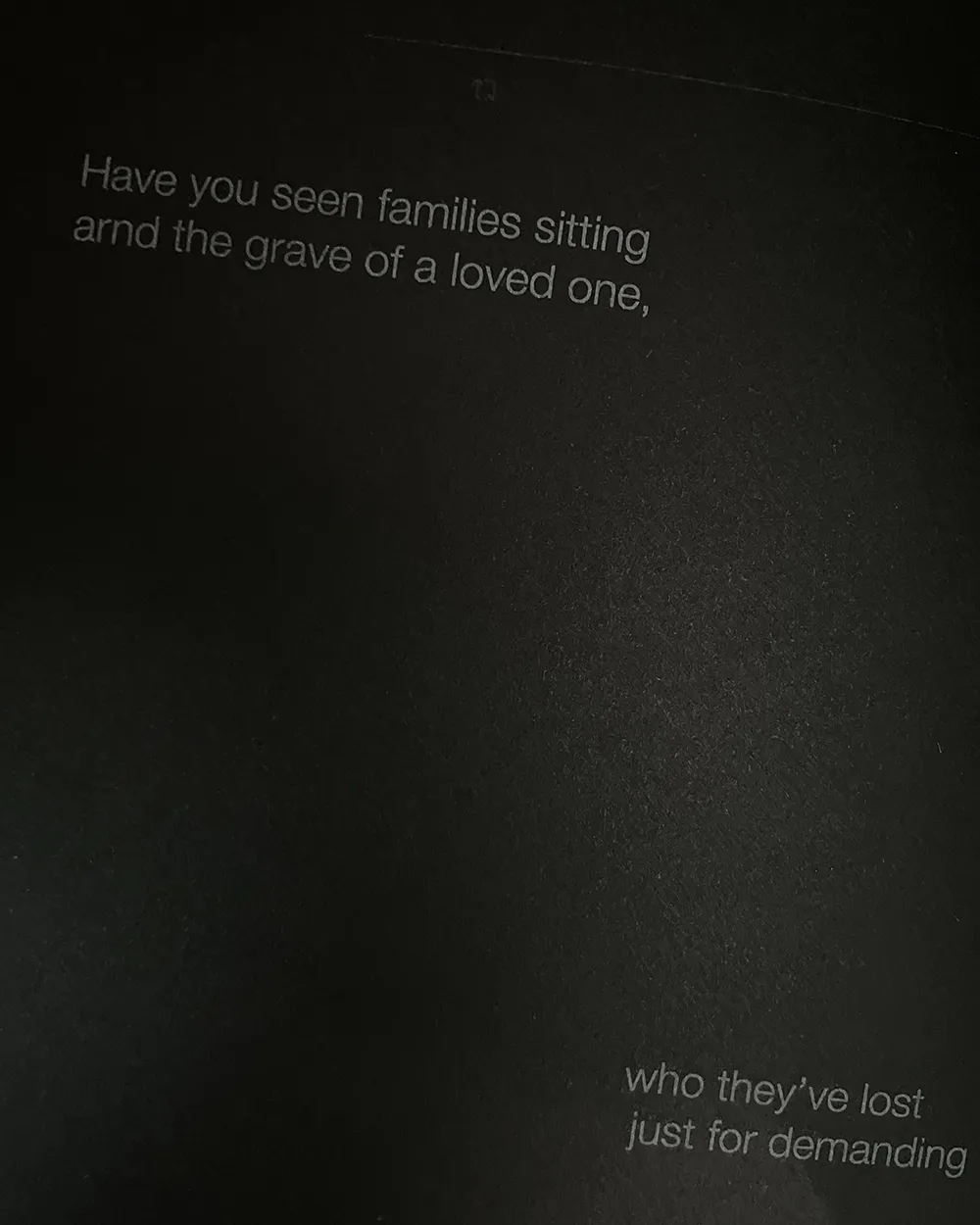
But how to respond to the impossible demand of the title? It's such a beautiful, powerful, paradoxical title. The lines inside the booklet are short, split, torn, and displaced from their referents. Distilled and visceral.
after
>>>
was interrogated
Any time Arab sneezes
ship him/her to
/ / /19
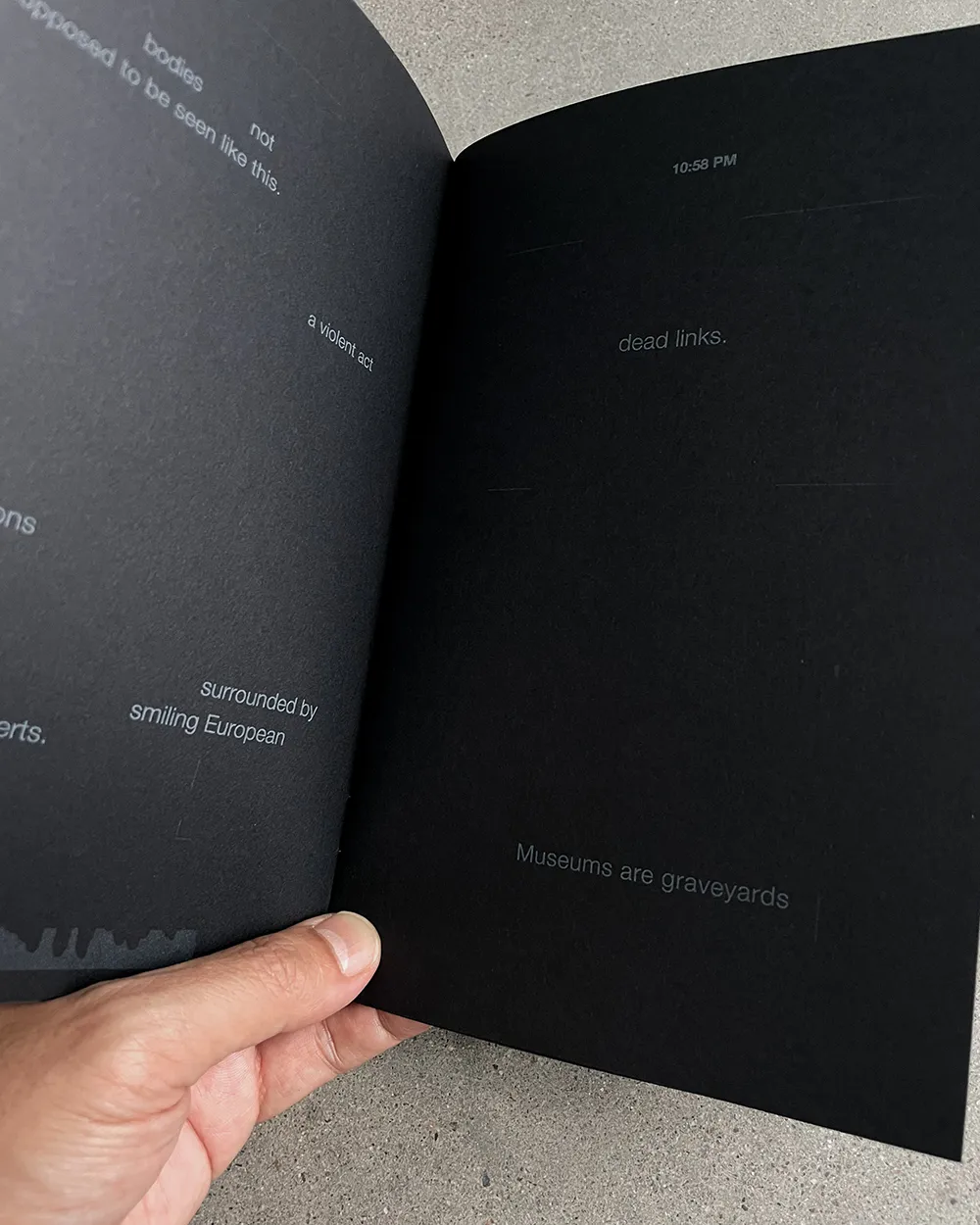 With their careful selection and placement, each word becomes loaded, even as it floats on the page. How can we not feel, not meet, their weight, their quiet precision, their damning accusations? The digital source material is by its nature ephemeral, highlighted by the evidence of censorship and redaction, which makes this act of archiving feel all the more precious, poetic…
Once an
artist, now just a tool
But of course, I understand… the brutality and everydayness of the occupation, the genocide, and our everyday complicity, should not be adorned as poetry. We should not sit quietly and contemplate, we should not gaze and admire the beautiful resilience, we need to act. Now. Today and tomorrow and yesterday. Is that too much ask? Is it??? It shouldn’t be, but I honestly don’t know anymore…
what
makes people return
I read something recently about the difference between an archive and a repertoire as distinct systems of storing and transmitting cultural memory. The archive is static, immutable, whereas the repertoire is repeated and performed, reinterpreted each time. The archive requires a physical separation from the living event. The repertoire requires bodies in movement.
This reminds me of the poetic "fugues" we sampled/wrote/designed/performed in our zine Four Minutes to Midnight (2004-2014), where words, phrases, and stanzas re-appeared from issue to issue in new contexts with different typographic registers. At the time it felt like a way of keeping things/words alive, developing a vocabulary we desperately needed through repetition.
On the bus, I was telling a writer friend how I cancelled my Netflix account because I just can’t seem to engage with fiction anymore. He mentioned how he is currently struggling with writing fiction himself, with its imperative to describe. A line of fiction, or even non-fiction, can only designate something outside of itself, something other. It has to convey an image or an idea that the reader then has to comprehend and recreate. It is linear, it has to narrate. A line of poetry simply is. A perpetual present. A crisis. A constant return.
in which
Practice
disappeared.
* It's important to note that many tablers at the NYABF(2024) showed clear, active, solidarity with Palestine (though many also didn’t give a damn). Following a call from the Printed Matter Union for Printed Matter to adopt PACBI (which they didn’t), a spirited, if brief, walkout was organized amongst the participants.