Notes from Design, Power, and Antifascism(s)
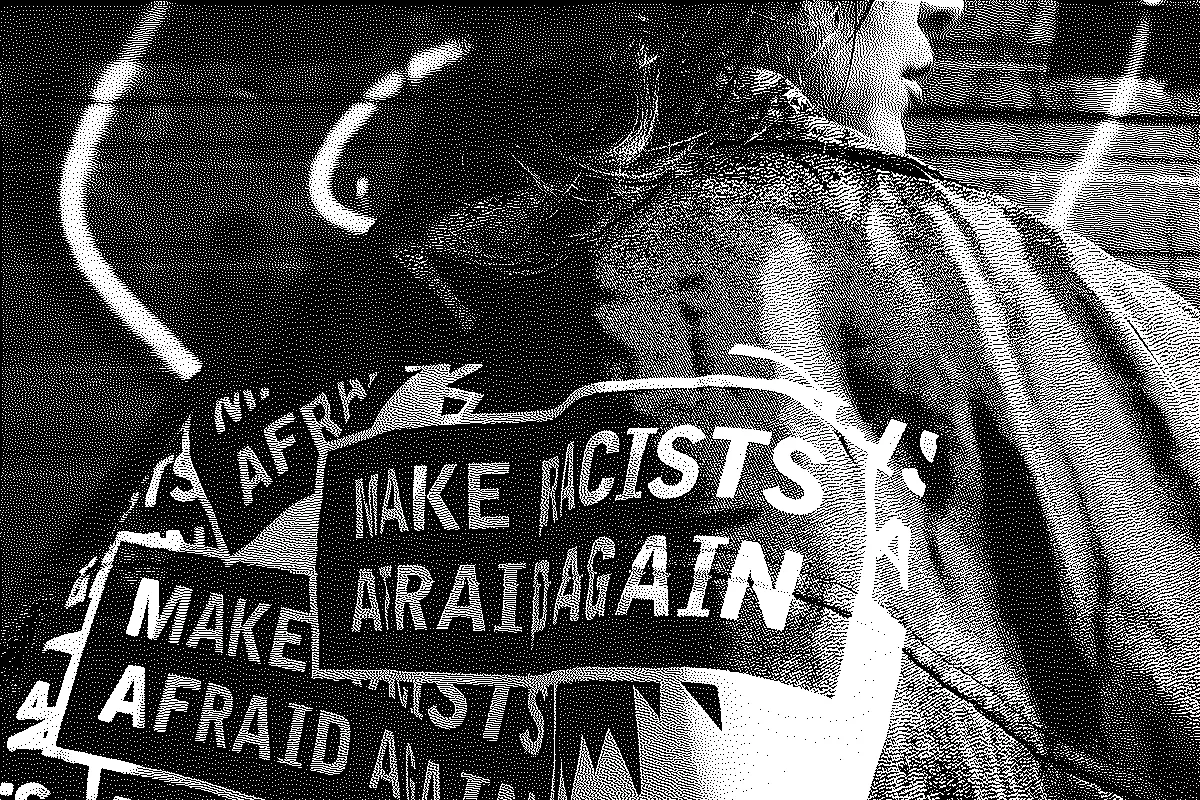
Earlier this week I hosted my friends and comrades Josh MacPhee and Sandy Kaltenborn for a presentation and panel discussion at Concordia’s 4th Space. It felt a bit strange gathering to talk about antifascism and movement building in such an official, academic, technologized, research venue, but the crowd was great and I think our contributions were useful for the current moment. The video recording will be released soon once Sandy is safely back home in Berlin.
Sandy framed the breadth of his visual communication practice (in 170 slides!!!) and his organizing work with the tenants-rights initiative Kotti. Josh presented the strategies and design work he produced as part of the Shut Rikers campaign. And I reflected on the (graphic) relationship between antifascist mobilizing and BIPOC community organizing here in Tiohtià:ke / Montréal between 2016-2020. Overall, there were a lot of overlaps and some interesting tensions between how we each think about design as part of social movements confronting systemic racism, the state, and capital. The presentations were largely visual, but here are a few quotes and textual notes taken from our slides:
———
"Design translates values into tangible experience."
— Dori Tunstall
———
"Every image is social. Every image was made to socialize people. Interestingly, though, one could say there are non-social images — in the sense that they tend to create distance between people. and there are images that foster closeness, that invite conversation and exchange. So, some images are made to separate people, others to bring them together. So when we create social or cultural images, we do so in order to spark relationships and discussions… On the other side: there are images that, in their own way, convey an image of society. they suggest a very specific kind of social context: everything is beautiful, everything is fine, everything is clean, everything is purified. Purified of what? I believe they are purified of poverty. And I wonder — what will they do with the poor?"
— Vincent Perrottet
———
"I believe that while we may have designed Silence=Death, the people who responded to its call actually created it. The relationship that images have with the people who deploy them — in particular if your work aims to open spaces for grassroots political organizing — is one where the image takes on a life of its own."
— Avram Finkelstein
———
"Power is a measure of individual or collective agency/capacity to act to affect their conditions/environment. Power might also be the capacity to adapt to changing conditions (Be water). Most designers have little understanding of power..."
— Kevin Yuen Kit Lo
———
"my focus lies in the social — from intimate, everyday interactions to broader political structures of power. i seek to develop a visual and verbal language that articulates critique through poetic means and emancipatory image politics.
design, in this sense, is not about creating objects, but about enabling relationships, spaces of communication, and shared meaning. aesthetics emerge through social use and through a dialogical, democratic approach to making."
— Sandy Kaltenborn
———
"It’s important to understand Fascism as a social movement in itself in order to effectively oppose it."
— Kevin Yuen Kit Lo
———
"Death by Rikers: 38"
— Just facts from Josh MacPhee
———
Update 04/25: The video of the panel is now live. Watch it here.